
SaaS vs. PaaS vs. IaaS: Discover the Right Cloud Model

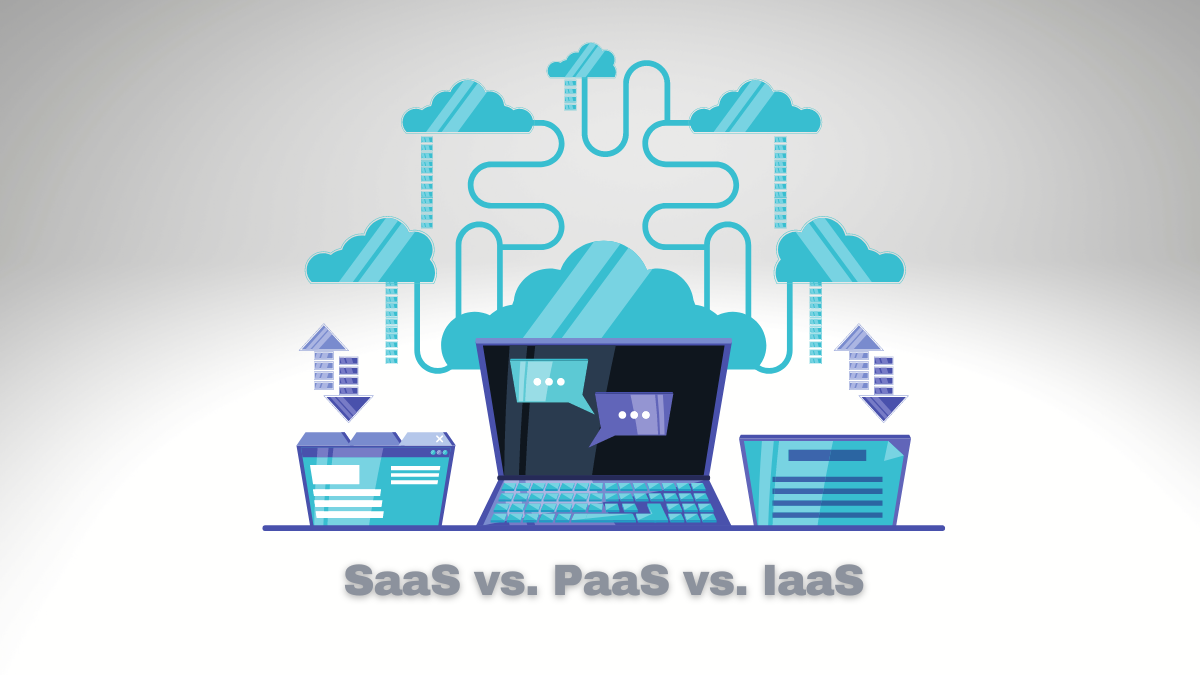
Cloud computing changes how businesses work. But if you’re thinking about moving away from managing your own IT, you need to know what options are actually available.
When companies consider the switch to the cloud, understanding the different service models matters. Three main options keep coming up: Software-as-a-Service (SaaS), Platform-as-a-Service (PaaS), and Infrastructure-as-a-Service (IaaS).
Once you understand what each one does, you’ll be better equipped to pick the right one for your situation. Let’s dig into the details.
What is SaaS?
SaaS is essentially software that’s already hosted and ready to use. You access it through a web browser, mobile app, or desktop client, usually paying monthly or annually.
Think of it as the cloud services you probably use already. The vendor handles everything: the application itself, the storage, networking, servers, databases — all of it. They manage upgrades and security patches too. Your service Level Agreement covers uptime and performance.
One thing worth noting: most SaaS products let you add storage and users without hitting unexpected costs.
Pros
- You don’t manage anything except your account. Sign up, pay, use the app.
- Many options have low monthly rates or free trials to get started.
- Works on any device with an internet connection.
- Adding users is usually just a matter of signing up.
-
Need more storage? You can usually buy it without a big hassle.
- Some vendors let you customize their products, which helps.
Cons
- Integration can be painful if the app isn’t built around open standards.
- Vendor lock-in is real. Getting in is easy; getting out is another story.
- Limited integration support sometimes means your team has to build workarounds.
- Putting sensitive business data on someone else’s platform carries risk.
- Customization options are often restricted.
-
Performance depends on the vendor. When they have issues, you have issues.
- Some apps just don’t have all the features you’d find in a full desktop version.
When to use SaaS
SaaS works well when you need to distribute an app widely and quickly. Tax calculators and similar tools fit here. Startups or small companies that need to launch fast — without dealing with server management — often find SaaS the practical choice.
It’s also useful for short-term projects that need affordable collaboration. If you need both mobile and web access from the same app, SaaS handles that.
What is PaaS?
PaaS gives you a platform for building, running, and managing applications. The provider handles the hardware and most of the software stack.
Here’s the basic idea: PaaS provides a framework developers can use to create customized apps. It handles scaling automatically, and you can deploy to public, private, or hybrid clouds.
The provider supplies both the tools and the hardware. Developers use those tools to build. You can scale up or down depending on what you need.
Pros
- Dev teams can spin up environments for development, testing, and production quickly.
- It’s a shared software environment, so teams work on the same setup.
- Scaling is built in — buy more capacity when you need it, scale back when you don’t.
- Developers can focus on building without worrying about maintaining the underlying software.
- Deployment tools are available out of the box.
- Business policies can be automated more easily.
Cons
- Your data sits on a third-party platform. That raises security questions.
- Runtime issues can come up if the PaaS isn’t optimized for your specific language or framework.
- Workflow management tools you already use might not integrate well.
- Lock-in is a concern. If the vendor doesn’t offer good migration options, switching gets expensive.
When to use PaaS
PaaS makes sense when you need to develop, run, and manage app interfaces or microservices. It’s useful for organizing and managing databases.
It also works as a collaboration hub — some include chat, voice, and video. Advanced analytics can help spot patterns in business data.
When a lot of developers are working on the same project, PaaS simplifies things. Mid-level developers can often build apps here without needing deep infrastructure expertise.
What is IaaS?
IaaS gives you on-demand access to computing, networking, and storage resources. You pay as you go instead of buying hardware upfront.
The vendor handles the infrastructure: servers, storage, networking, physical data centers. You get active scaling — resources adjust based on demand. Multiple customers might share the same physical hardware.
What you manage: operating systems, virtual machines, middleware, applications, and your own data.
Pros
- You can set up redundant servers and stay online during power outages.
- Provisioning happens in minutes, not weeks. Testing new ideas gets faster.
- You get real control over security, including encryption at the data center level.
- Providers run data centers in multiple regions, so you can host closer to your users.
- More flexibility overall — deployment, networking, servers, and processing all automate.
- Hardware costs match actual usage.
Cons
- Security threats can come through the host infrastructure. Vulnerabilities in the system could expose data moving between virtual machines.
- Legacy applications might need work before moving to IaaS. They weren’t designed for this environment.
- Your team needs training to handle the infrastructure properly.
- You may be responsible for backup, security, and business continuity. That adds management overhead.
When to use IaaS
If you’re unsure how much demand an app will have, IaaS lets you start small and scale as needed. Startups and small companies use it to avoid big upfront hardware and software purchases.
Growing companies like it because they can swap hardware and software without much friction. Big Data workloads work well here — you can ramp up computing power when you need it.
For complex, graphic-intensive tasks that need superior performance, IaaS has the muscle.
Choose the best option
By now you should have a clearer picture of what each service does. The key is matching the model to what your business actually needs.
One thing to understand upfront: these three models are separate. You pick one based on how much control you want versus how much management you want to avoid.
Whether you’re trying to scale apps, monetize services, or move toward cloud-native development, pick the platform that actually fits your goals.
Also, check the Kubernetes service.
Explore more like this

Kill the Docker Hub Token: OIDC Trust for GitHub Actions
On July 31, 2026, Docker shipped OIDC connections for GitHub Actions to any organization on a Docker Team, Docker Business, or Docker Hardened Images subscription, plus organizations in the Docker-Sponsored...

Lambda SQS Provisioned Mode Now Scales to 10,000 Pollers: The Throughput Math That Decides If You Need It
AWS raised the poller ceiling on August 3, 2026. Provisioned Mode for Amazon SQS event source mappings went from a maximum of 2,000 event pollers to 10,000, which puts the...

CloudWatch Managed Prometheus Collectors on EKS: Delete the Scraper, Keep the Metrics
On July 31, 2026, AWS shipped managed Prometheus collectors for Amazon CloudWatch. The pitch is short: you hand CloudWatch a scrape configuration and a VPC connection, and AWS provisions, scales,...

Comments