
Benefits of Using AWS Cloudfront

Leveraging the Power of Caching to Reduce Latency
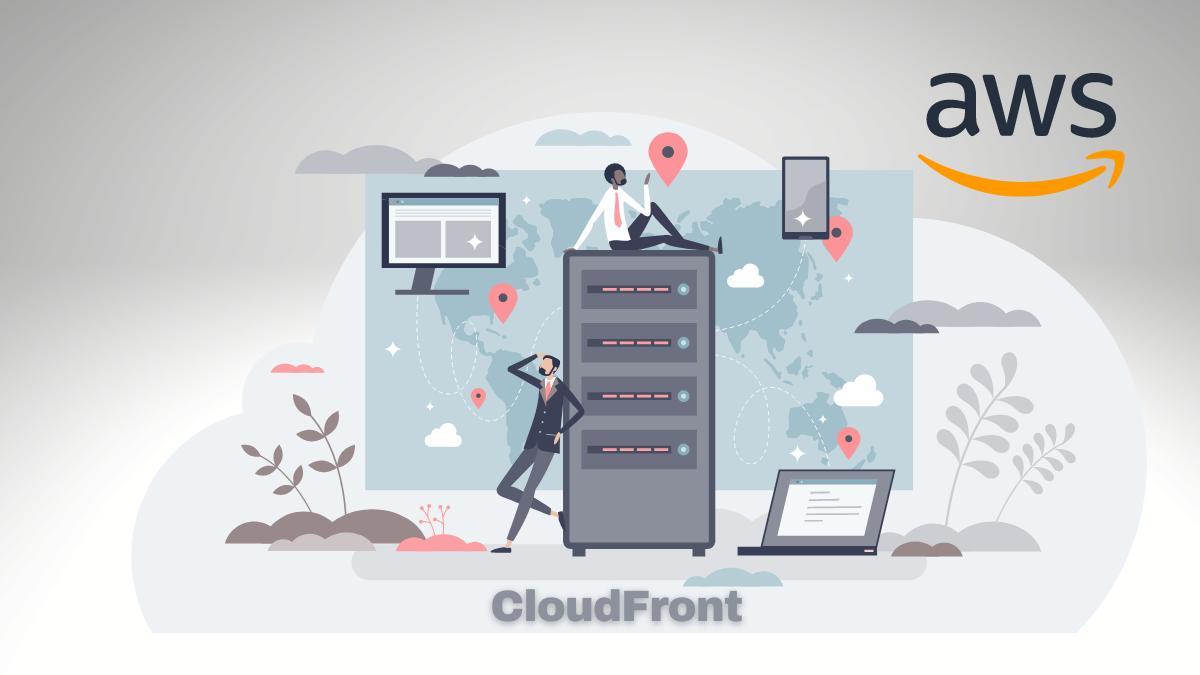
AWS CloudFront is a content delivery network that caches your content at edge locations around the world. When someone visits your site, CloudFront serves files from the nearest edge location instead of routing them back to your origin server. This cuts down load times significantly, especially for users far from where your origin is hosted.
Improve Load Time with Object Caching
CloudFront stores copies of your files at edge locations globally. When users request content, CloudFront delivers from the nearest location. The result is faster page loads compared to fetching everything directly from your origin bucket or server.
Object caching lets CloudFront hold onto files longer, so repeat visits hit the cache instead of your origin. You can tune cache durations with Cache-Control max-age and Cache-Control s-maxage headers to control how long content stays fresh at edge versus in browsers.
Lower Network Traffic and Reduced Costs
Pre-loading content into edge locations near your users means less data traversing long network paths. This reduces bandwidth costs, especially for traffic that would otherwise travel across expensive inter-region links.
CloudFront’s pricing is pay-as-you-go. You only pay for what you use, with no upfront commitments. Data transfer out to the internet is tiered by region, and egress from edge locations to the internet is generally cheaper than equivalent origin egress.
Scalability, Security, and Reliability
CloudFront handles traffic spikes automatically. When your content suddenly gets popular in a new region, CloudFront serves from edge locations without you provisioning extra capacity.
AWS Shield Standard comes built-in and provides protection against common DDoS attacks at no extra cost. For higher-tier protection, AWS Shield Advanced offers more sophisticated mitigation and 24/7 support.
Safeguard Your Content with Built-in Security Measures
High-Level Encryption for Better Data Protection
CloudFront supports HTTPS/TLS encryption between viewers and edge locations, and between edge locations and your origin. You can require HTTPS-only access to force secure connections.
For origins, you can use AWS Certificate Manager to provision free TLS certificates. CloudFront then handles termination at the edge.
Control Content Access with Signed URLs and Cookies
If you need to restrict access to certain content, CloudFront supports signed URLs and signed cookies. This lets you serve premium content, private videos, or documentation only to users with valid credentials.
You set up key pairs in IAM, create signing policies, and CloudFront verifies signatures before serving content. No origin-side session management required.
Protect Against DDoS Attacks
AWS Shield Standard defends against common volumetric and protocol DDoS attacks automatically. For application-layer attacks, you can combine Shield with CloudFront’s rate limiting and AWS WAF web ACLs.
WAF lets you block IP addresses, geo-restrict content, and create custom rules based on request attributes. It integrates directly with CloudFront distributions.
Reduce Costs Per Data Transfer While Enhancing User Experience
Lower Bandwidth Charges While Improving Website Performance
CloudFront fetches content once from your origin and then serves it to many users from edge cache. This means your origin pays for one upload but many downloads happen from nearby edge locations.
The pricing model varies by region and data transfer volume. For high-traffic sites, the savings on origin egress can be substantial.
Pay-as-you-go Pricing Model
CloudFront charges based on actual usage. There are no monthly minimums or fixed contracts. You pay per request and per GB transferred, with tiered pricing that decreases at higher volumes.
Optimize Web/App Performance Through Geo-Targeting
Deliver Targeted Content with Geolocation Routing
CloudFront can route users to different content based on their geographic location. You can configure cache behaviors that check the viewer’s country and serve location-specific versions of pages.
This is useful for redirecting to localized versions of your site, serving region-specific pricing or promotions, or complying with content licensing restrictions.
Edge Functions for Custom Logic
CloudFront Functions runs lightweight JavaScript at edge locations with sub-millisecond startup times. You can modify requests and responses, A/B test, or add custom headers without invoking Lambda@Edge.
Lambda@Edge handles more complex use cases, like calling external APIs during request processing or running business logic that requires the full Node.js runtime.
Stream Audio and Video Globally
CloudFront integrates with Amazon MediaTailor for personalized ad insertion and with video-on-demand services for adaptive bitrate streaming. Edge caching reduces origin load during peak viewership.
Distribution Flexibility
You can restrict content delivery to specific countries using geo-restriction. CloudFront returns 403 errors for blocked locations, or you can redirect users to an alternate page.
RTMP to HTTPS
CloudFront no longer supports RTMP distributions as of December 2023. For streaming, use HTTPS endpoints or MediaConvert with HLS packaging.
Easy Integration with REST APIs and Lambda Functions
Quick Data-backed Responses
CloudFront can cache responses from API Gateway, reducing origin load for repeated requests. You configure which query parameters to forward and cache, improving hit ratios for consistent API calls.
Lambda@Edge for Real-time Processing
You can run Lambda functions triggered by CloudFront events to process requests on the fly. Common uses include authenticating users, modifying response content, or personalizing headers.
Lambda@Edge functions run in AWS regions closest to viewers, and CloudFront replicates them globally automatically.
Securing Your Web Applications with AWS CloudFront
HTTPS Encryption
CloudFront requires HTTPS for communication with viewers by default when you add a custom domain. You can also redirect HTTP to HTTPS or require HTTPS for specific paths.
For origins, CloudFront supports HTTPS to your S3 bucket, ALB, or custom origin server. ACM makes certificate provisioning straightforward.
Access Control and User Authentication
Beyond signed URLs, CloudFront supports origin access control (OAC) for S3 origins, which replaces the older origin access identity. OAC supports SSE-KMS encryption and works with all AWS regions.
You can also combine CloudFront with AWS WAF for rate limiting, IP blocking, and SQL injection protection.
Keeping Your Content Available with AWS CloudFront
Caching Best Practices
CloudFront caches based on full URLs by default. For better hit ratios, normalize query strings using CloudFront Functions to ensure identical requests cache together.
Configure Cache-Control headers on your origin responses. CloudFront’s minimum TTL is 0 seconds, and you can set maximum TTLs up to 3600 seconds (1 hour) for standard distributions, or longer with extended TTLs.
Geo-targeted Routing Features
When you need content closer to users, geo-routing directs traffic to origin servers in specific regions. CloudFront’s 225+ edge locations across 100+ cities mean users typically connect within 50 miles of an edge node.
Multi-Origin Support
CloudFront supports multiple origins with different behaviors. You might route /api/* to an API Gateway, /static/* to an S3 bucket, and everything else to an ALB. CloudFront evaluates path patterns and forwards requests accordingly.
How To Scale AWS CloudFront For All Your Sites
Setup Multiple Distributions
For managing many sites, separate CloudFront distributions give you independent configurations. You can use different AWS accounts or tags to organize, though a single account can handle dozens of distributions.
Implement DNS Resolution via Amazon Route 53
Route 53 latency-based routing directs users to the CloudFront distribution with lowest latency from their location. Combined with Route 53 health checks, you get automatic failover if a distribution becomes unavailable.
Use Different Formats and Codecs
For video delivery, consider MediaConvert to transcode content into multiple quality levels and formats. CloudFront’s adaptive bitrate streaming delivers the best quality for each viewer’s connection speed.
How To Monitor Your AWS CloudFront Usage
Using Amazon SNS for Notifications
CloudFront can publish real-time metrics to SNS when error rates spike or cache hit ratios drop below thresholds. You configure alarms in CloudWatch and set notification endpoints in SNS.
Setting Up Custom Dashboards With CloudWatch
CloudFront automatically sends metrics to CloudWatch. You can build custom dashboards tracking requests by HTTP status, cache hit ratio, 4xx and 5xx error rates, and latency percentiles.
Enable Access Logs in Amazon S3 Buckets
Enable CloudFront access logs to capture every request in detail. Logs include requester IP, headers, response status, and latency. Store them in S3 and analyze with Athena or a log parser.
Boosting Your Website Performance with AWS CloudFront
Optimizing Image Delivery
CloudFront supports Brotli compression alongside Gzip. Brotli typically achieves 15-20% better compression than Gzip for the same content, reducing transfer sizes and load times.
For responsive images, consider using CloudFront Functions to rewrite URLs based on device type headers that CloudFront adds automatically.
Minimizing Latency Issues With Route Optimization
CloudFront participates in AWS Global Accelerator, which routes traffic over the AWS backbone network instead of the public internet. This can reduce latency by 30-50% for globally distributed applications.
CDN Compression Support
CloudFront compresses content automatically when viewers send Accept-Encoding: gzip or Accept-Encoding: br headers. This happens at the edge with no origin-side compression required, reducing origin CPU load.
Conclusion
AWS CloudFront handles content delivery across 225+ edge locations worldwide. It reduces latency by caching at the edge, lowers origin load, and provides built-in security features including DDoS protection and HTTPS encryption.
The service integrates naturally with other AWS products: S3 for storage, Lambda for custom logic, WAF for application-layer filtering, and Route 53 for DNS. If you’re already using AWS, CloudFront is the straightforward choice for a CDN.
CloudFront cache tag update
CloudFront now supports native cache-tag invalidation. I wrote the operational workflow here: CloudFront Cache Tag Invalidation: Precise Purges Without Nuking Your Cache.
Explore more like this

Cloud IoT Security: Zero Trust, Identity, and Signed Updates
On September 11, 2026, the Cyber Resilience Act’s incident-reporting rules start applying in the European Union. That is 22 days after this article’s publication date. A manufacturer that learns of...

Bedrock Web Search: Grounding an Agent Without Building a Scraper
On August 4, 2026, AWS made Web Search on Amazon Bedrock generally available, and the entire integration surface is one JSON object: {"type": "web_search"}. That is the whole change from...

ECR Now Allows 200 GB Image Layers. Your Model Weights Still Do Not Belong There
On August 3, 2026, AWS raised the maximum Amazon ECR image layer size to 200 GB for images pushed with docker push. The announcement names the driver in the second...

Comments